Last Updated: 22 November 2026
Quick Summary
The simplest renovation process is a single-team model: one contractor holds the whole schedule, sequences every trade, and answers for the finish. This gives you one point of contact, one sequence and one party accountable when something slips, rather than you chasing separate trades.
- The order of work runs strip out, structural, first fix, plastering, second fix, then tiling, flooring and final touches.
- A typical schedule runs 12 weeks, from strip-out in weeks 1-2 to snagging and handover in week 12.
- Plaster must be dry before second fix and tiling, or trapped moisture shows through finishes.
- Kitchen units and worktops must be on site before the fit week, not ordered in it.
- Agree decision deadlines for every order and build in a contingency buffer before work starts.
Table of Contents
- Why One Team Beats Managing Trades Yourself
- The Order of Work for a House Renovation
- Building a House Renovation Timeline and Schedule
- Your Renovation Schedule Template and Whole-House Planning Checklist
- Frequently Asked Questions
Why One Team Beats Managing Trades Yourself
The simplest renovation process is a single-team model: one contractor holds the whole schedule, sequences every trade, and answers for the finish. At Animanimus, our in-house team manages renovations from design to installationation.
The trade-off, side by side
| Decision area | One team under one roof | Separately hired trades |
|---|---|---|
| Who owns the master schedule | The lead contractor, in writing | You, usually informally |
| Who chases late trades | The contractor | You, between other jobs |
| Who is accountable for defects at handover | One party, one contract | Split by trade, often disputed |
| Communication | One point of contact and one weekly update | Multiple threads and phone calls |
| Cost visibility | One quote with coordination built in | Cheaper line items, plus your unpaid time |
| Risk if a trade drops out | Contractor replaces them | You re-tender and re-sequence |
| Insurance and site safety | Contractor’s policy and RAMS | You may need your own cover |
A renovation process run by one team removes the gap between trades. One point of contact, one sequence, one party accountable when something slips.
Watch out: splitting work into separate packages is where bits of the job quietly fall through the gaps, particularly inspection sign-offs and the final snagging list, which sit between trades rather than inside any one of them.
What the coordination actually covers
Compare like for like, and check what each quote excludes.
At Animanimus, we do not subcontract our work to other contractors, and your project is delivered by our in-house team. See the trades we cover on our services page, or read more on how a single point of contact improves accountability.
The Order of Work for a House Renovation
The order of work for a house renovation follows a fixed sequence: strip out, structural work, first fix, plastering, second fix, then tiling, flooring and final touches. Get it wrong and later trades undo earlier work.
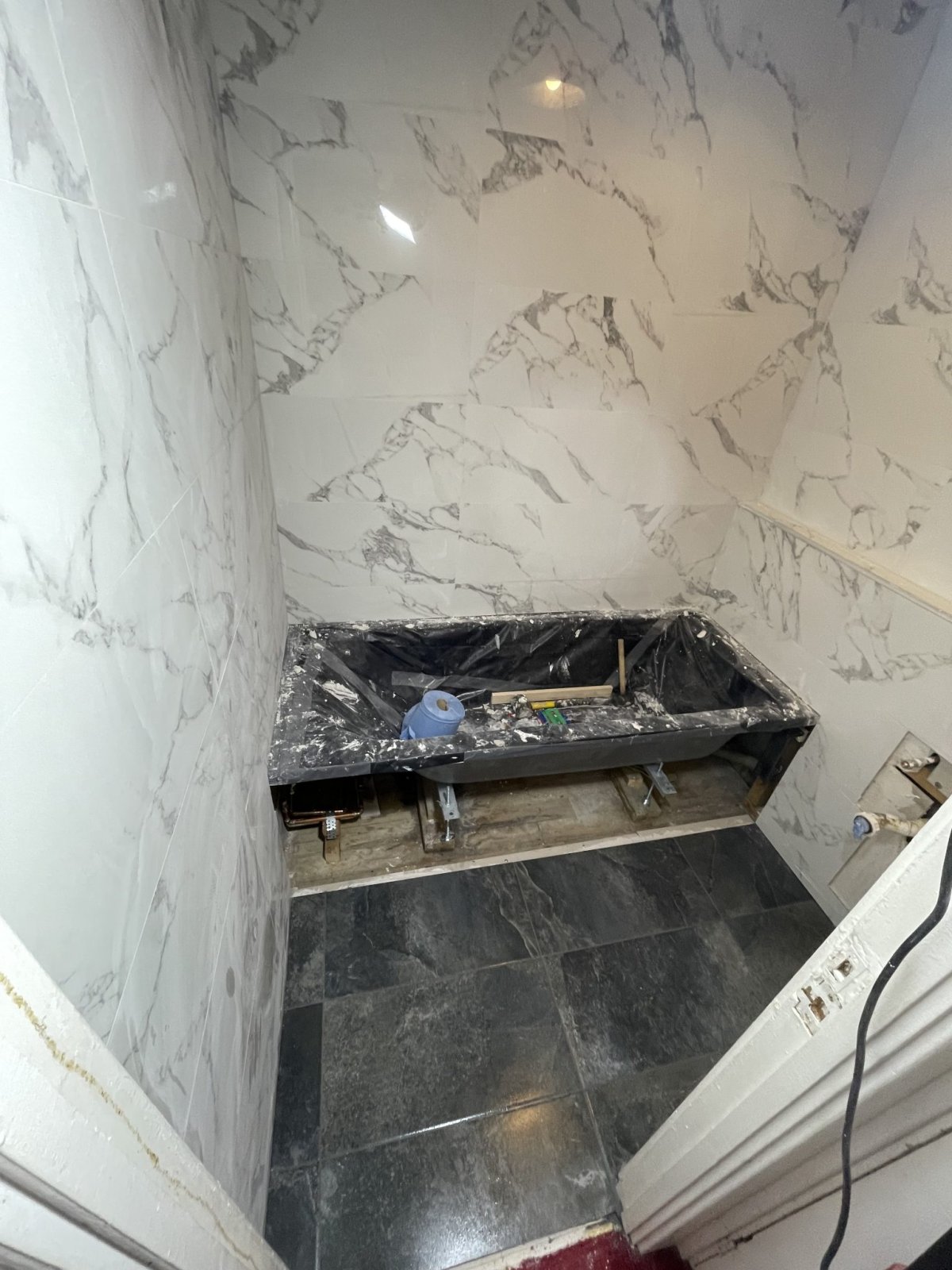
Here is the sequence we follow:
- Demolition and strip-out
- Structural work and any steel
- First fix: electrical, plumbing, heating
- Plastering and drying time
- Second fix and kitchen or bathroom fitting
- Tiling, flooring, decorating
- Snagging and handover
Deliveries and lead times slot into this order: order too early and materials sit in the way; too late and trades stand idle.
Building a House Renovation Timeline and Schedule
A house renovation timeline is often built backwards from the handover date, with each trade given a window and a noted dependency. Kitchens and bathrooms drive most of the length, sitting at the junction of first fix, plastering, second fix and tiling.
Plan the project timeline in phases:
- Weeks 1-2: strip-out and structural work
- Weeks 3-4: first fix and inspections
- Weeks 5-6: plastering, then drying
- Weeks 7-9: kitchen and bathroom fitting
- Weeks 10-11: tiling, flooring, decorating
- Week 12: snagging and handover
A worked example with trade dependencies
| Week | Phase | Trade on site | Must finish before |
|---|---|---|---|
| 1-2 | Strip-out and structural | Demolition, structural | First fix can start |
| 3-4 | First fix | Electrician, plumber, heating | Plastering can start |
| 5-6 | Plastering and drying | Plasterer | Second fix and fitting |
| 7-9 | Kitchen and bathroom fit | Joiner, plumber, electrician | Tiling and flooring |
| 10-11 | Tiling, flooring, decorating | Tiler, floor layer, decorator | Snagging |
| 12 | Snagging and handover | All trades | Handover |
Two dependencies cause most overruns. Plaster must be dry before second fix and tiling; rushing it traps moisture and shows through finishes. And kitchen units and worktops must be on site before the fit week, not ordered in it.
How one team runs the schedule day to day
When all trades sit under one roof, the master schedule has a named owner:
For realistic phase lengths, read our guides on how long a kitchen renovation takes and how long a bathroom renovation takes. Build in a contingency buffer and agree decision deadlines for every order before work starts.
Your Renovation Schedule Template and Whole-House Planning Checklist
A renovation schedule template lists each phase, the trade responsible, the start and end dates, and what must finish first. The whole-house checklist below keeps the work sequence honest.
Use this checklist before work starts:
- Agree the full scope of work in writing
- Confirm who holds the contract and insurance
- Map dependencies between trades
- Set delivery dates for kitchen units and worktops
- Book inspection slots
- Agree a snagging and handover date
- Set a weekly progress check
Track progress weekly against the schedule. Catch a slipped trade early and the next one barely notices.
Ready to plan your own schedule? Contact the team to discuss your project and arrange a site visit.
Managing multiple trades is the part that sinks most renovations. Animanimus removes it: one in-house team holds your schedule, coordinates every trade and stays accountable through snagging and handover. Our team covers bathrooms, kitchens, bespoke cabinetry and full refurbishment, with one point of contact from design to install. Get started with Animanimus and keep your renovation on time and on budget.
Frequently Asked Questions
How do you organise tradespeople for a home renovation?
The most reliable route is to place every trade under one responsible team. A single coordinator sets the order of work, books each trade in sequence, and holds the handover between them. That removes the gaps where a plumber finishes but the plasterer has not been booked. At Animanimus, the in-house team covers every stage from design to installationation, so no trade is subcontracted and blame is not passed between contractors when something slips.
What is the correct order for renovation work?
Strip out and structural work come first, followed by first fix for electrical, plumbing and heating. Plastering follows, then second fix, tiling, kitchen or bathroom fitting, flooring and final decoration. Snagging closes the job. The order matters because later trades cover earlier work, so getting the sequence wrong means paying twice. A renovation schedule template that lists these phases with dependencies helps you spot clashes before they cost you days.
Is it easier to use one company to manage all renovation trades?
It removes the coordination burden from you. Hiring a plumber, electrician and tiler separately can look cheaper on paper, but you become the project manager, chasing arrivals and absorbing delays. A single team keeps the renovation schedule under one roof, so accountability sits in one place. Pricing depends on scope and specification, so ask for a written quote rather than comparing headline day rates.